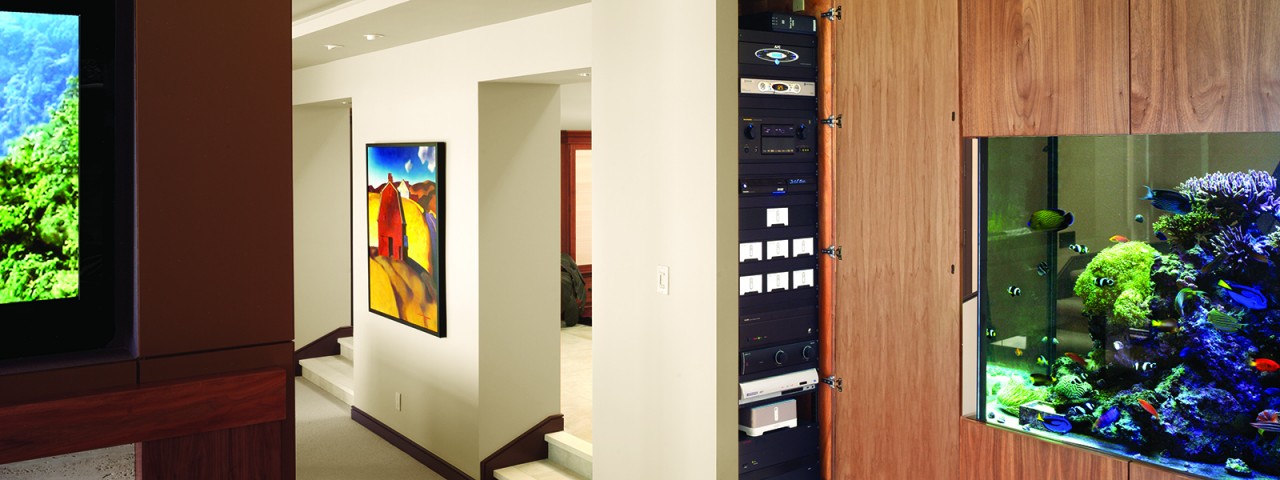
With Internet of Things technology powering a growing number of devices in buildings, real-time updates from cloud-stored data becoming the daily norm, and remote management now at consumer fingertips, the idea of personalized building automation has taken on a life of its own.
“We used to spend the majority of our time installing high-end audio/visual systems, but now we install everything from climate control to lighting, window treatments, security, and more, into living and work spaces,” said Lee Travis, owner of Wipliance LLC.
Travis launched Wipliance in 2006 and operates the Bellevue headquarters location; a second location in Scottsdale, Arizona; and an electrical-contracting company. In total, his combined workforce is now 30 strong.
Today, the company supports residential installs, as well as notable commercial building projects such as the new SPIRE luxury condominium tower in downtown Seattle. Other commercial customers include restaurants and bars, tenant improvement contractors, and companies looking to automate board rooms or other conference spaces.
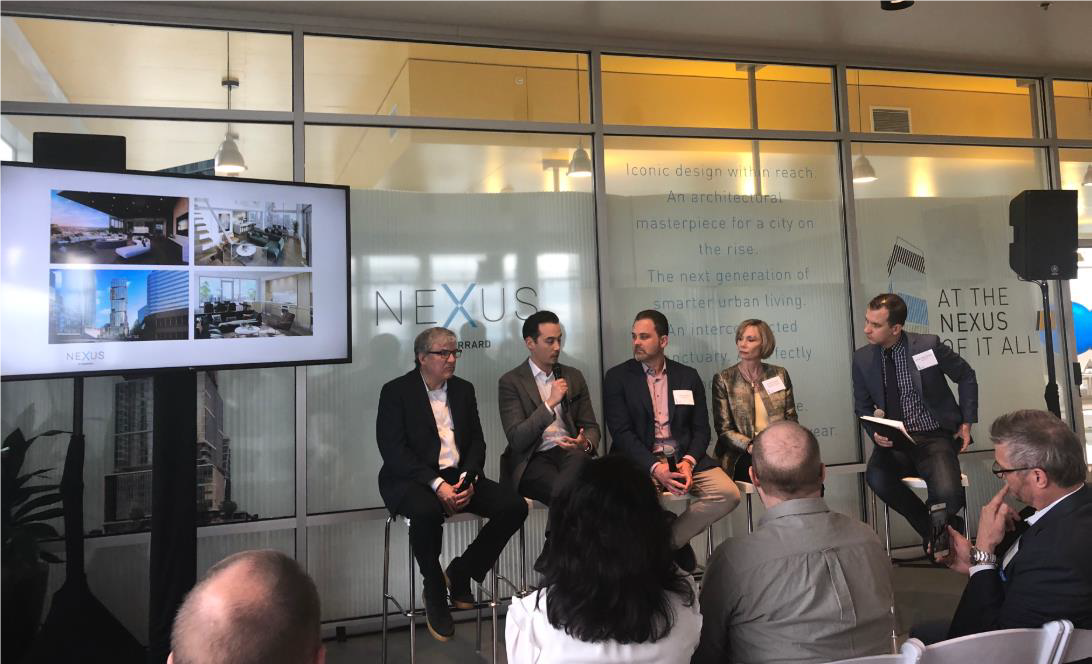
PICTURED ABOVE: GeekWire’s Brian Westbrook hosted a panel discussion with thought leaders profiling NEXUS in a new generation of high-tech, high-rise living.Existing and prospective homeowners attend “At the NEXUS of it All Event”; Celebrate the official topping off of an iconic tower
On April 11th, a series of events atop the Peak Lounge in the Kinects Apartment tower transformed this sky-high venue into an informative neighborhood showcase and a celebration for hundreds of current and prospective homeowners at NEXUS. Presented by Seattle Magazine, the exhibition included The Downtown Seattle Association, LID I-5, NHL Seattle, Waterfront Seattle, the Washington State Convention Center expansion and NEXUS, which stands front and center in the fastest-growing neighborhood on the West Coast.
“Burrard Group hosted an extraordinary event that illuminated how the northern migration of downtown Seattle positions our homebuyers at the nexus of all,” said Matt VanDamm, Vice President of Realogics Sotheby’s International Realty (RSIR). “We certainly share in the excitement for this pivotal development.”
PICTURED ABOVE: NEXUS by Burrard is a 389-unit, 41-story high-rise condominium, which is 93% presold – the remaining 28 homes were recently released for sale.
The events kicked off with a broker luncheon and open house followed by a GeekWire podcast presented by the FutureCast Forum on “High-Tech, High-Rise Living”. Moderator Brian Westbrook hosted panelists including urban living specialist Julie McAvoy of RSIR, development strategist Billy Mainguy of Burrard Group, home automation expert, Lee Travis of Wipliance and real estate economist Brian O’Connor of O’Connor Consulting Group. Among the key findings, downtown Seattle is entering a housing cycle of increased homeownership following a record number of apartments being built, largely fueled by a tech-driven economy. Consumers desire a progressive, in-city lifestyle that is optimized by home automation and a sense of community that is activated by exclusive to building apps and thoughtful amenities that encourage owners and friends to converge and connect. Meanwhile, NEXUS was notably referenced as the archetype of such next generation development and remarkably, it is the only residential opportunity offered for individual homeownership in the burgeoning neighborhood.
“We forecast strong job growth and housing demand to continue well into the next decade as Seattle’s tech hub resists any slowdown that may be experienced in the national economic cycle,” said O’Connor. “The challenge however, will be affordability. New developments like NEXUS are experiencing construction hard cost increases of 6-8% per year, which increases the price of supply ahead.”
Recognizing the finest achievements in custom installation and the best new custom-installation-targeted products and installations the Consumer Technology Association (CTA) in conjunction with CE Pro magazine announced the winners of the 2019 TechHome Mark of Excellence Awards at CES 2019, Las Vegas.
Presented in an evening ceremony at the Venetian Hotel in Las Vegas, the Mark of Excellence Awards recognize groundbreaking residential custom installation projects performed by professional integrators, as well as consumer technology products and services that are primarily targeted at the custom installation channel.
The 168 entries were judged by an independent panel of industry experts. Winners of these prestigious awards receive exposure via the websites and print publications from the Consumer Technology Association and CE Pro.
The tech industry has planted deep roots in the greater Seattle area, and it was only going to be a matter of time before it made its mark on housing. It has been a lot of fun to integrate more innovative technology into our homes, such as “smart” thermostats and remote lighting controls. But, just as transitional design fuses modern materials with more classic architectural design, cutting-edge components are seamlessly integrated within tried-and-true planning to deliver the best of both worlds. After all, who would want to live inside a server room?
We look at technology in terms of how it can relevantly enhance the classic comforts of home. These are some of the trends that we see continuing into the near future – you’ll notice lots of the familiar on a larger, more luxurious scale. Ultimately, we all want to love where we live.
The concept of the smart home is no longer reserved for sci-fi flicks and Jetson-esque cartoons, which just a few short years ago may have seemed lifetimes away. Increasingly more homes are becoming connected, intelligent, and changing the way we live our daily lives, moving us closer to the once fictionalized idea of a technologically advanced home. As demand for smarter homes increases, these ten trends are quickly weaving their way into home design across the Puget Sound and beyond:
1.Advanced Home Networking
It seems difficult to imagine living our lives without access to the internet. Much in the same way that people depend on the internet, so do smart homes and the devices in them. Many experts refer to this as the “Internet of Things”, or the network of devices, appliances, and features that we operate with wireless, mobile and voice controls to create a smart home. The most basic prerequisite for a smart home is a solid internet connection and very good in-home Wi-Fi. Sticking a router in your laundry room and hoping for the best simply doesn’t cut it anymore because every device, from surveillance cameras to thermostats, needs to live on the network if it is going to be integrated into the home. The network structure in today’s smart homes typically consists of enterprise class networking equipment including several strategically placed Wireless Access Points (WAPs) to ensure that the whole home is blanketed in solid Wi-Fi coverage.